


A Basic Introduction To Solar PV Water Pumps
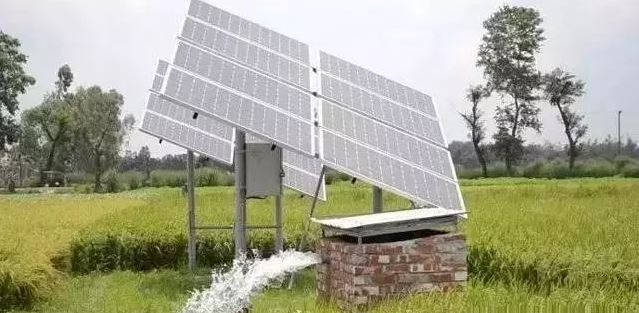
The Solar Pumping System is also known as a photovoltaic water pump. This is a photovoltaic water pumping system that uses the electricity generated by the photovoltaic array to drive the pump. The whole system mainly consists of a photovoltaic array, a solar water pumping inverter and a water pump. It is a photomechanical system that has developed rapidly in recent years and is the most attractive way of supplying water in sunlight-rich areas of the world today, especially in remote areas where electricity is scarce.
1. System composition.
1, photovoltaic array (Solar Array): also known as solar cell components, mainly to convert the sun's light energy into electrical energy, to provide working power to the load pump motor.
2, solar water inverter (Solar Pumping Inverter) or controller: the operation of the solar water pump to implement control and regulation, with the solar array issued by the electrical energy to drive the pump, and according to the changes in sunlight intensity, instantly adjust the output frequency, so that the output power close to the maximum power of the solar array.
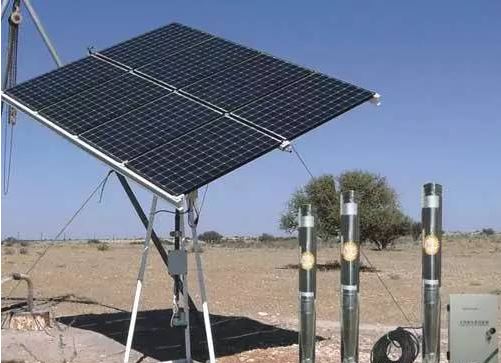
3, water pump (pump): usually lift the liquid, convey the liquid or make the liquid increase pressure, that is, the mechanical energy of the prime mover into liquid energy, so as to achieve the purpose of pumping liquid machine collectively called the pump.
2.Operation process
Electricity from the solar cell is used to drive a DC, permanent magnet, brushless, position sensorless, stator-rotor double plastic sealed motor or a high efficiency asynchronous motor or a high speed switched reluctance motor to drive a high efficiency water pump from the depths of the earth to the surface for irrigation of farmland or drinking water for humans and animals through maximum power point tracking as well as conversion and control devices.
3. Classification.
1、DC brushless solar water pump (motor type).
Motor type brushless DC water pump is composed after using brushless DC motor plus impeller. The shaft of the motor is connected to the impeller, and there is a gap between the stator and rotor of the pump, so water will penetrate into the motor after a long period of time to increase the possibility of burning the motor.
Advantages: brushless DC motors have been standardised, there are special manufacturers mass production, the cost is relatively low, high efficiency.
2、Brushless DC magnetic isolation solar water pump.
Brushless DC water pumps use electronic components to commutate, no need to use carbon brush commutation, the use of high-performance wear-resistant ceramic shaft and ceramic sleeve, sleeve through injection molding and magnet connected to the whole also avoids wear and tear, so the life of brushless DC magnetic type water pump is greatly enhanced.
The stator and rotor parts of the magnetically isolated water pump are completely isolated, the stator and circuit board parts are epoxy resin potted and 100% waterproof, the rotor part uses permanent magnets, the water pump body is made of environmentally friendly materials, low noise, small volume and stable performance. Various parameters can be adjusted by winding the stator and it can be operated with wide voltage.
Advantages: long life, low noise up to 35dB or less, can be used for hot water circulation. The stator and circuit board of the motor are sealed with epoxy resin and completely isolated from the rotor, so they can be installed underwater and are completely waterproof.
3、Three-phase AC water pumps are driven by three-phase AC motors.
Unlike DC systems, solar AC water pumps consist of a solar array (providing power), a solar water inverter (converting DC to AC while controlling the motor frequency) and a three-phase AC motor pump.
Benefits: The three-phase AC motor water pump in the system can be replaced with a commercially available electric or diesel driven AC water pump, making it very compatible. At the same time, the AC pump breaks the power limit of the DC pump, which can be applied from 150 watts to 105 kW, making it suitable for large areas of farmland, desert management and irrigation.
4. Advantages.
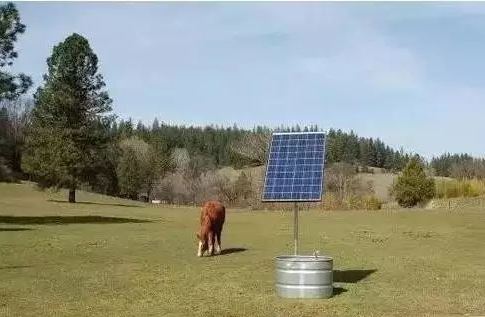
1, Reliable: long life, photovoltaic power supply rarely used moving parts, reliable work.
2, Safe, no noise, low power consumption, no other public hazards. No solid, liquid or gas harmful substances, absolutely environmentally friendly.
3, Easy to install and maintain, suitable for unattended, especially for its high reliability and attention.
4, Good compatibility, photovoltaic power generation can be used with other energy sources, but also according to the needs of the photovoltaic system can be easily increased capacity.
5, High degree of standardization, can be connected by components in series and parallel to meet the needs of different electricity, universal.
6、Solar energy is available everywhere, with a wide range of applications.
7, Having a good long-term economy, especially compared with the common diesel engine pumping, has the overwhelming economic advantage.


